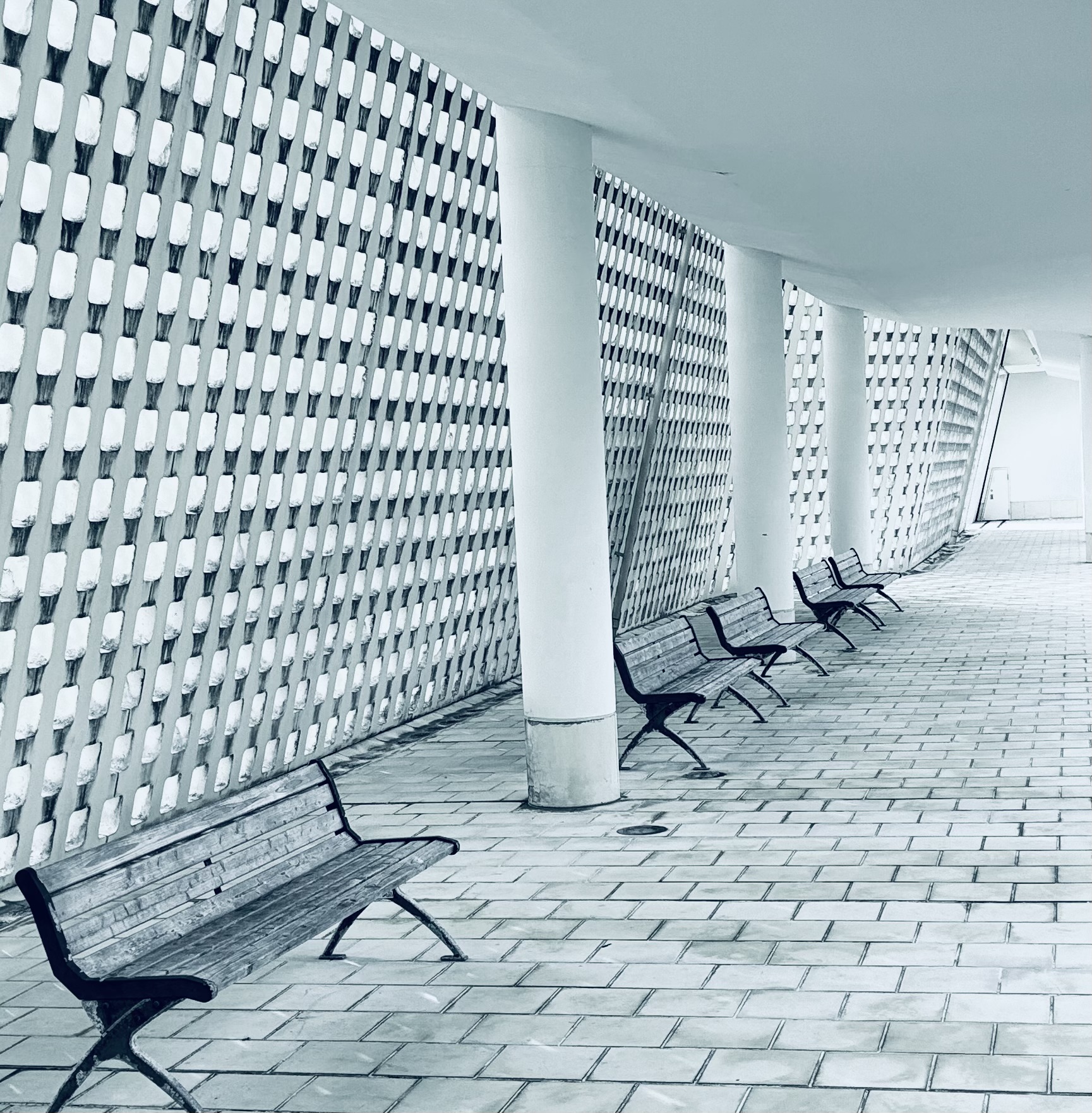
Title; Golden Hour Traces
Chapter 2
Residential Development and the Study of Time and Space
Learning the Design of Time and Space Through Human Living
The experience of residential development occupies a central position in the formation of 22degrees Universe.
More than three decades of professional involvement in residential development provided not merely an opportunity to create buildings, but an opportunity to continuously observe how human beings live.
Residential development is often understood as a business of real estate, planning, architecture, and construction.
Within the context of this project, however, residential development is viewed as a practical field of research into how human beings experience their daily lives, what conditions create a sense of well-being, and how environments influence the quality of human experience.
Why do people return home?
What do people seek within a living environment?
What conditions create a sense of comfort and security?
What kinds of spaces enrich everyday life?
These questions remained at the center of observation throughout many years of residential development.
A residence is not merely a physical structure.
It is an environment in which human life unfolds.
People wake in the morning.
They eat, learn, work, rest, pursue hobbies, spend time with family and friends, and eventually return to sleep.
A residence serves as the setting in which all of these activities take place.
For this reason, residential development cannot be separated from an understanding of human behavior and human psychology.
Where do people walk?
Where do they pause?
Where do conversations naturally occur?
Where do they experience comfort?
Where do they experience peace of mind?
Repeated observation revealed that space is not simply a physical condition.
It is a powerful factor in shaping human experience.
Every space is formed by floors, walls, and ceilings.
Yet what human beings actually experience is not the floor, wall, or ceiling itself.
What they experience is the space created by those elements.
The value of a space is not determined solely by its size.
It is influenced by relationships between spaces, visual connections, the movement of light, views, openness, and connections to the outside environment.
These factors shape the way a space is perceived and experienced.
Every residence contains both interior and exterior space.
Living rooms and bedrooms represent interior environments.
Gardens, terraces, and balconies represent exterior environments.
Between these two conditions exists an intermediate zone.
Long-term observation revealed that this intermediate zone plays an important role in human well-being.
Human beings do not live entirely indoors.
Nor do they live entirely outdoors.
Some of the richest human experiences emerge within the transitional space between the two.
The feeling of wind through an open window.
Time spent on a terrace.
A sunset viewed from a balcony.
Such experiences create a connection between human life and the natural world.
Residential environments are also inseparable from time.
The value and character of a space change throughout the day.
Morning light.
Midday sunlight.
Evening shadows.
Nighttime illumination.
The same physical space can present entirely different experiences depending on time.
Morning sunlight entering through an eastern window.
A room transformed into golden tones by the setting sun.
Soft lighting that surrounds a quiet evening.
These are not merely environmental conditions.
They are experiential elements that influence human emotion and behavior.
Years of practical experience led to a realization that time is not experienced only through clocks.
Time reveals itself through space.
Light became another essential subject of study.
Natural daylight supports activity.
Artificial lighting supports rest, comfort, and reflection.
Light for dining.
Light for reading.
Light for concentration.
Light for entertainment.
Light for sleep.
Lighting is not simply a means of illumination.
It is an environmental element that changes the quality of time itself.
Temperature, humidity, and air quality are equally important.
Human beings can only live comfortably when these environmental conditions are properly balanced.
Excessive cold interferes with rest.
Excessive heat interferes with concentration.
Poor air quality directly affects health and well-being.
Residential development therefore involves shaping not only visible environments but also invisible environmental conditions that influence daily life.
Materials also became an important area of study.
Wood.
Stone.
Metal.
Glass.
Textiles.
Human beings are constantly surrounded by materials.
Materials influence experience through appearance, texture, sound, temperature, aging, and physical interaction.
To understand spatial experience, it is necessary to understand material experience.
Looking back, the primary subject of study was never architecture itself.
It was human living.
More precisely, it was the structure of experience itself.
How do people spend time?
How do they experience space?
How do those experiences influence emotion, memory, and perception?
These questions gradually became central to the research.
During the development of 22degrees Universe, one realization became increasingly clear.
The experience accumulated through residential development was, in essence, a long-term study of time and space.
Music.
Nature.
Light.
Materials.
Landscape.
Silence.
Human behavior.
These are not separate themes.
They are interconnected elements that shape human experience.
The concept of “Designing Time and Space,” which forms a core principle of 22degrees Universe, emerged directly from decades of observation and practical experience.
Residential development was not merely a profession.
It became a long-term field of practice through which human living and human experience could be observed, studied, and understood.
That research continues today through 22degrees Universe.
Chapter 2
住宅づくりと時間空間研究
人間の暮らしを通じて学んだ時間と空間のデザイン
22degrees Universe の思想形成において、住宅づくりの経験は重要な位置を占めている。
30年以上にわたる住宅づくりの実務は、単に建物を供給する仕事ではなく、人間の暮らしそのものを観察し続ける機会となった。
一般的に住宅づくりは、不動産事業や建築事業として理解されることが多い。
しかし本構想において住宅づくりとは、人間がどのような環境の中で生活し、どのような条件のもとで豊かさを感じるのかを研究する実践の場であったと捉えている。
人はなぜ家に帰るのか。
人は住まいの中で何を求めるのか。
どのような環境が安心感を生み出すのか。
どのような空間が豊かさを生み出すのか。
住宅づくりの現場では、こうした問いと長年向き合い続けることになった。
住宅とは単なる建築物ではない。
人間の人生が展開される環境である。
朝起きる。
食事をする。
学ぶ。
働く。
休息する。
趣味を楽しむ。
家族や友人と時間を過ごす。
そして眠りにつく。
住宅とは、それらすべての行為を受け止める器である。
そのため住宅づくりとは、人間の行動や心理を理解することなしには成立しない。
人はどこを歩くのか。
どこに立ち止まるのか。
どこで会話をするのか。
どこで安心を感じるのか。
どこで心地よさを感じるのか。
こうした観察を繰り返す中で、空間は単なる物理的な構造ではなく、人間の体験を形成する重要な要素であることが見えてきた。
すべての空間は床、壁、天井によって構成されている。
しかし人間が実際に体験しているものは床や壁や天井そのものではない。
それらによって生み出される空間である。
空間の価値は面積だけで決まるものではない。
空間同士のつながり。
視線の抜け。
光の入り方。
景観との関係。
外部との接続。
そうした要素の組み合わせによって、人間が受け取る印象や体験は大きく変化する。
住宅には内部空間と外部空間が存在する。
リビングや寝室などの内部空間。
庭やテラスやバルコニーなどの外部空間。
そしてその両者をつなぐ中間領域である。
長年の観察を通じて、この中間領域は人間の豊かさに深く関わっていることが見えてきた。
人は完全な屋内だけでは生きていない。
人は完全な屋外だけでも生きていない。
その中間に存在する曖昧な領域に、人間らしい体験が生まれる。
窓を開けた時に感じる風。
テラスで過ごす時間。
バルコニーから眺める夕暮れ。
自然と住まいが接続するその瞬間に、人間は豊かさを感じる。
住宅は時間とも切り離すことができない。
同じ空間であっても、時間によってその価値は大きく変化する。
朝の光。
昼の日射。
夕方の陰影。
夜の照明。
同じ場所であっても、時間によってまったく異なる表情を見せる。
東から差し込む朝日。
西日によって黄金色に染まる室内。
静かな夜を包み込む照明。
これらは単なる環境条件ではない。
人間の感情や行動に影響を与える体験要素である。
長年の実務経験を通じて、時間は時計の中に存在するものではなく、空間の中に現れるものであるという認識へと至った。
さらに光は住宅における重要な設計要素である。
昼間の自然光は活動を支える。
夜の照明は安らぎを生み出す。
食事を楽しむ光。
読書に集中する光。
映画を楽しむ光。
眠りへ向かう光。
光は単に明るさを確保するための装置ではない。
時間の質を変化させる環境要素である。
同様に、温度、湿度、空気も重要である。
人間は快適な環境の中で初めて安心して暮らすことができる。
寒すぎる空間では休息が妨げられる。
暑すぎる空間では集中が難しくなる。
空気環境は健康そのものに影響を与える。
住宅づくりとは、こうした目に見えない環境条件を整える行為でもあった。
また、素材も重要な研究対象である。
木。
石。
金属。
ガラス。
布。
人間は常に素材に囲まれて生活している。
素材は視覚だけでなく、触覚、音、温度感、経年変化を通じて体験に影響を与える。
空間体験を理解するためには、素材を理解する必要がある。
振り返ると、住宅づくりを通じて研究していたのは建築そのものではなかった。
人間の暮らしであった。
さらに言えば、人間がどのような時間を過ごし、どのような空間を体験し、その結果どのような感情を抱くのかという体験の構造そのものであった。
後に22degrees Universeを構想する過程で、一つの認識が明確になった。
長年にわたる住宅づくりの経験は、時間と空間に関する研究であったということである。
音楽。
自然。
光。
素材。
景観。
静けさ。
人間の行動。
それらは独立したテーマではない。
すべては人間の体験価値を構成する要素である。
22degrees Universe における「時間と空間のデザイン」という考え方は、この長年にわたる観察と実践の上に成立している。
住宅づくりは職業であっただけではない。
それは人間の暮らしを観察し、人間の体験価値を研究するための長期的な実践の場であった。
そしてその研究は、現在も22degrees Universe の中で継続している。