About Nature Archive
Nature Archive is a long-term project dedicated to observing and documenting nature through photographs and brief field observations.
The archive focuses on light, weather, seasonal change, forests, cedar trees, bamboo groves, satoyama landscapes, agricultural environments, and the passage of time.
Particular attention is given to Finger Lime, Kiwi, wild plants, cultivated crops, and the relationship between nature, human living, and the traditional Japanese countryside.
Each record contributes to a growing archive within the 22degrees Digital Museum, preserving observations that may otherwise pass unnoticed.

Kaffir Lime — New Growth from Seeds
Date / 日付
August 31, 2026
Location / 場所
Chiba Satoyama, Japan
Subject / 対象
Kaffir Lime / Makrut Lime
(Citrus hystrix)
Category / 分類
Cultivated Nature / Citrus / New Growth / Seasonal Observation / Long-term Cultivation
Observation / 観察記録
New growth appeared again on the kaffir lime plants at the end of August 2026.
Following increased rainfall during the previous one to two weeks and recent fertilization, fresh young shoots have begun developing vigorously.
These plants have a history extending back approximately three years.
The original seeds were obtained through a family friend from Myanmar, where this citrus is familiar as part of the food culture of Southeast Asia.
Only around 10–15 seeds were originally sown.
They germinated successfully, and approximately ten plants have continued to grow. What began as extremely small seedlings has now developed into plants approximately 40–50 cm tall.
Because the plant originates from a warm Southeast Asian climate, winter survival in Chiba was one of the major concerns from the beginning. The young plants were therefore protected and managed indoors during winter.
Over several growing seasons they have survived and continued to develop.
Cultivation has not always been easy.
Leaves have occasionally curled or become distorted, and the plants have been affected by scale insects and other pests. Swallowtail butterflies also visit the citrus plants, sometimes laying eggs from which caterpillars emerge.
As far as practical, the plants have been cultivated without agricultural pesticides, making these interactions with insects part of the continuing relationship between cultivation and the surrounding natural environment.
Kaffir lime is particularly known for its strongly aromatic leaves. The leaves are widely associated with Southeast Asian cuisine and are an important aromatic ingredient in dishes such as Thai tom yum soup.
For me, the distinctive fragrance of these leaves is one of the elements that gives tom yum its characteristic depth and identity.
The kaffir limes are being cultivated alongside finger limes in the Chiba Satoyama.
Citrus trees are also grown in the surrounding landscape, including on land opposite the house. Observing this environment led to the idea that this area may provide conditions suitable for citrus cultivation.
Rather than forcing plants into an unsuitable environment, the intention has been to understand the characteristics of this land and grow plants that can develop in relationship with it.
Now that the kaffir lime plants are becoming considerably larger, a new question is emerging:
How should these plants be managed as they continue to grow?
It is a fortunate question to have.
日本語記録
2026年8月31日、千葉の里山で育てているコブミカン(カフィアライム/マクルットライム)に、新しい芽が再び伸び始めていることを確認した。
この1〜2週間に雨が比較的多かったことと、施肥を行ったこともあり、夏の終わりに新しい成長が始まっている。
この植物を育て始めたのは、およそ3年前にさかのぼる。
東南アジア・ミャンマー出身の家族の友人から、現地ではこの柑橘が身近な存在であるという話を聞き、お願いして種子を入手してもらった。
最初に播いた種は、わずか10〜15粒ほどだった。
小さな芽が出た当初は、「こんなに小さな子が本当に育っていくのだろうか」と、親心にも似た気持ちでその成長を見守っていた。
現在では約10株が育ち、それぞれ40〜50cmほどまで成長している。
東南アジアを起源とする植物であることから、当初から千葉での冬越しを心配していた。冬季には室内で管理するなどしながら、数年間にわたって育て続け、現在まで成長してきた。
栽培は決して順調なことばかりではなかった。
葉が縮れたり巻いたりすることもあり、カイガラムシをはじめとする害虫の被害も経験した。また、時折アゲハチョウが訪れ、卵を産み、その幼虫が育つこともある。
可能な限り農薬を使用せず育てることを基本としてきたため、こうした昆虫との関係も含めて、周囲の自然環境の中で植物を育てるということなのだと感じている。
コブミカンの大きな特徴は、その強い香りを持つ葉にある。
東南アジアの料理文化と深く関係する植物であり、タイ料理を代表するトムヤムクンなどにも、その特徴的な香りを与える重要な素材として使われる。
私自身、トムヤムクンのおいしさを形づくる大切な要素の一つが、この葉の独特な香りだと感じている。
現在、このコブミカンはフィンガーライムとともに育てている。
この土地の向かい側にもミカン類が育つ場所があり、この地域の自然環境を観察する中で、柑橘類と相性のよい土地なのではないかと考えるようになった。
土地に植物を無理に合わせるのではなく、この土地の自然を理解し、ここに合ったものを育ててみたい。
その考えから、フィンガーライムとともにコブミカンを育ててきた。
そして今、植物たちが大きく成長してきたことで、
「これから、この子たちをどう育てていこうか」
という新しい心配が生まれている。
それは、とても幸せな心配でもある。
Archive Principle / 記録原則
This record preserves the continuing relationship between a plant originating in Southeast Asia, the climate and soil of Chiba Satoyama, insects, human care, and time.
本記録は、東南アジアに由来する一粒の種から始まった植物と、千葉の里山の気候・土地・昆虫・人による手入れ、そして時間との関係を継続して保存するものである。
Nature Archive
Archive No.
22-NA-00001
Title
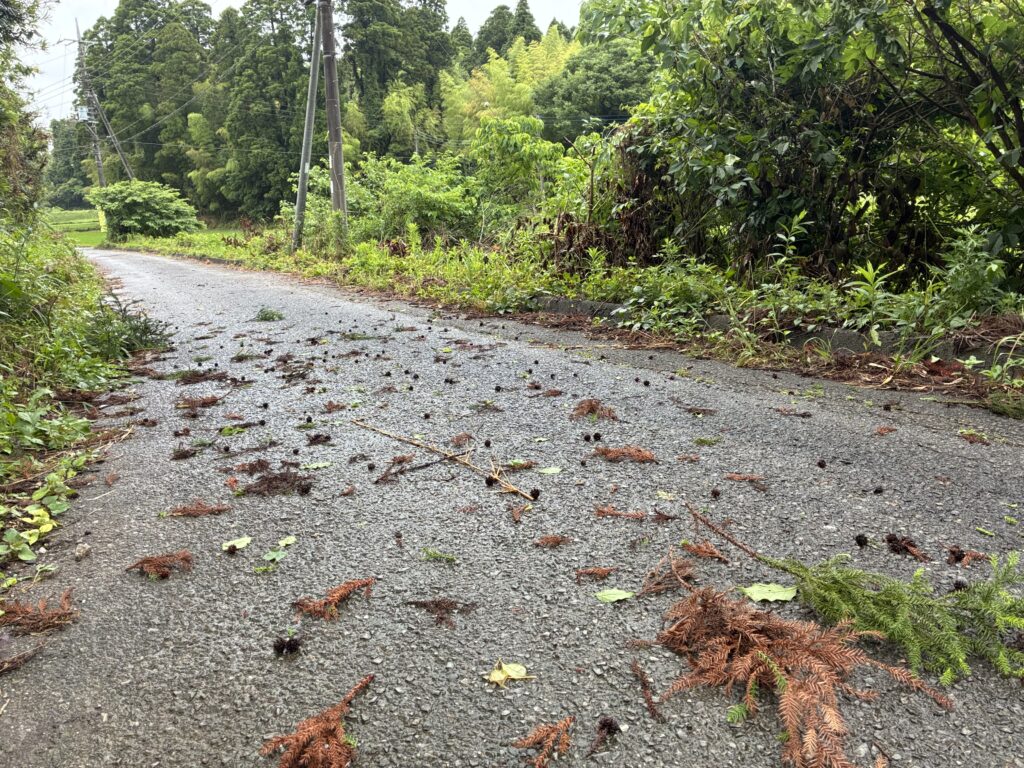
After the Storm ①台風の痕跡
2026.06.03
Photo
(Photo 1)
Observation
Typhoon Chan-hom passed through the satoyama during the morning.
Strong winds scattered cedar branches, leaves, and cones across the road.
The ground remained saturated with rainwater long after the storm had moved on.
The landscape showed visible traces of the storm’s passage.
Keywords
Typhoon
Storm
Cedar Forest
Rain
Satoyama
Weather
Nature Archive
Archive No.
22-NA-00002
Title
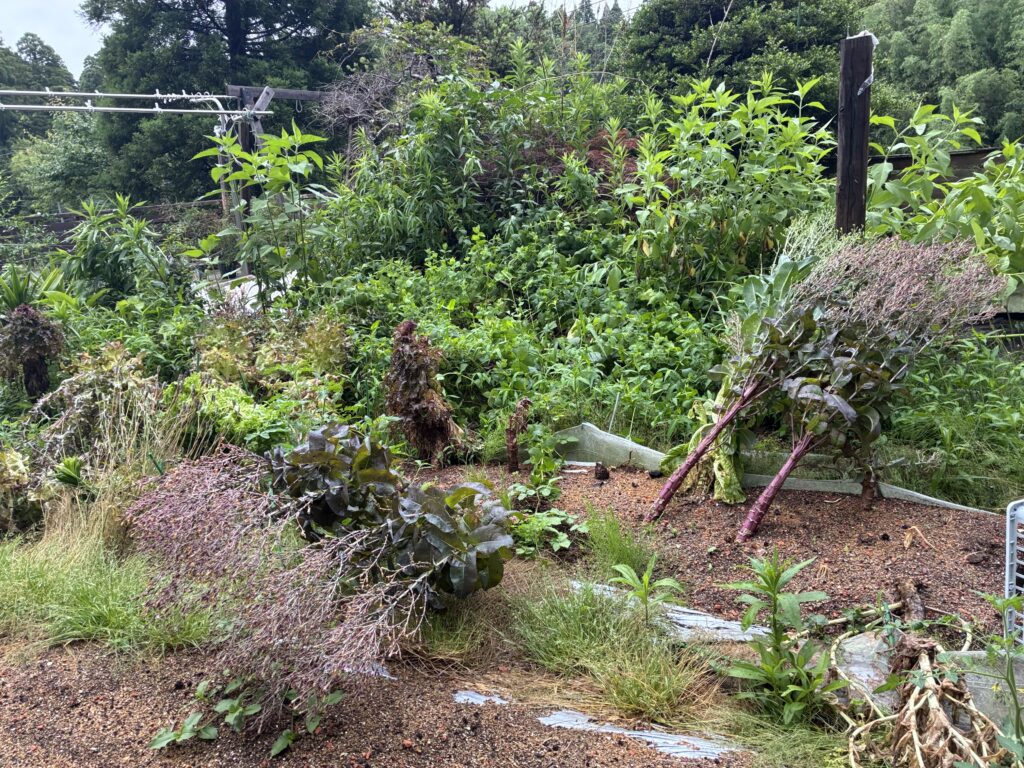
Bent by the Wind ②農地への影響
Date
2026.06.03
Photo
(Photo 2)
Observation
Several vegetables in the garden were bent by strong winds and heavy rain.
The plants remained standing, but their shapes reflected the force of the weather.
Moisture covered the soil and leaves after the storm.
The garden revealed both vulnerability and resilience.
Keywords
Agriculture
Vegetables
Wind
Rain
Resilience
Field Observation
Nature Archive
Archive No.
22-NA-00003
Title
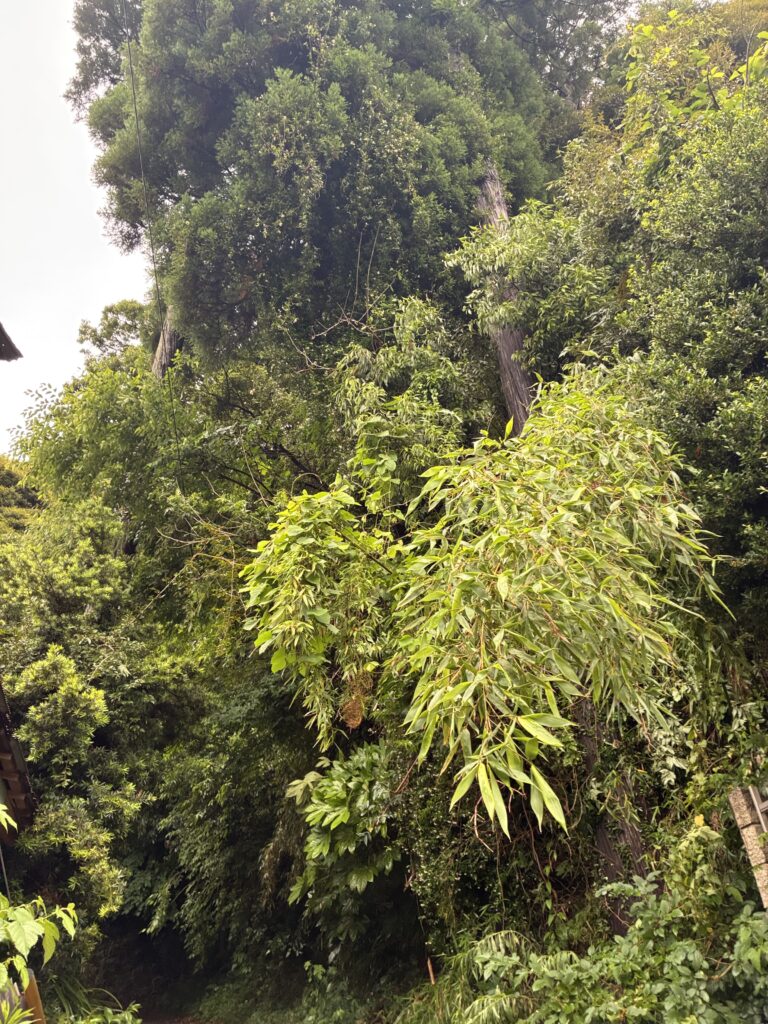
Grey Air After Typhoon ③台風後の空気と景観
Date
2026.06.03
Photo
(Photo 3
Observation
After the typhoon passed, warm humid air settled over the landscape.
The sky remained dark and grey despite the end of the storm.
A light wind continued to move through the forest and bamboo grove.
The atmosphere felt heavy, quiet, and suspended between weather systems.
Keywords
Humidity
Grey Sky
Atmosphere
Bamboo Grove
Forest
Transition
Nature Archive
Archive No.
22-NA-00004
Title
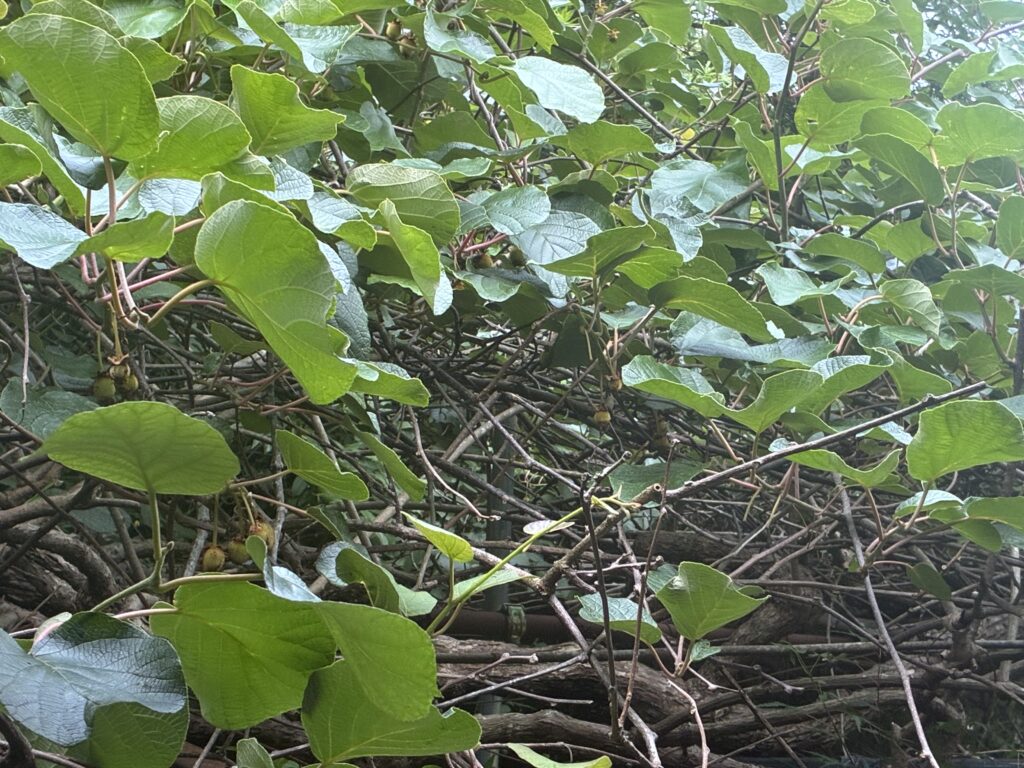
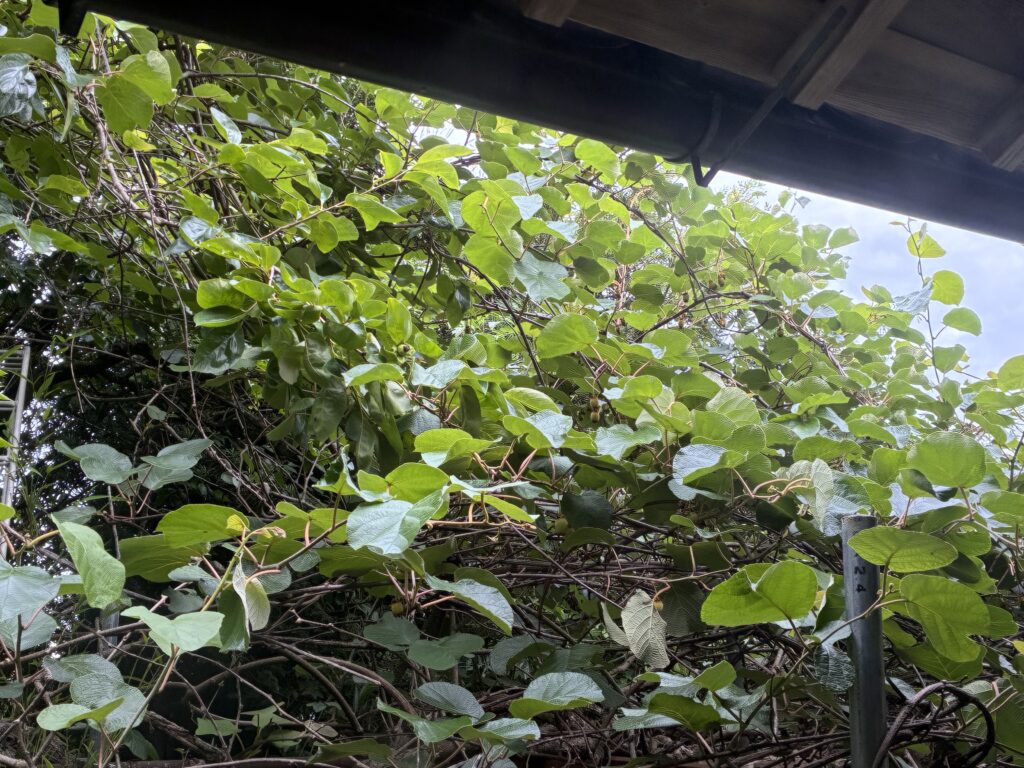
Kiwi Fruit After the Storm
Date
2026.06.04
Photo
(Photo 1)
Observation
The old kiwi vine showed little visible damage after the typhoon.
Its leaves remained upright and healthy despite the strong winds and heavy rain.
Small developing fruits continued to grow along the branches.
The vine appeared revitalized by the moisture left behind by the storm.
Keywords
Kiwi
Fruit Development
Typhoon Aftermath
Rain
Garden Observation
Related Assets
Nature Archive
Research Archive
(Kiwi Growth Observation)
Human Experience Archive
(Seasonal Harvest Expectation)
Nature Archive
Archive No.
22-NA-00005
Title
Kiwi Vine and Persimmon Tree
Date
2026.06.04
Photo
(Photo 2, Photo 4)
Observation
The kiwi vine continued to extend its branches through the surrounding persimmon tree.
Multiple stems intertwined within the canopy, competing for light and space.
The structure revealed a dynamic relationship between two mature plants.
Natural growth patterns created a complex layered landscape.
Keywords
Kiwi Vine
Persimmon Tree
Plant Interaction
Canopy
Growth Pattern
Related Assets
Nature Archive
Research Archive
(Plant Competition and Growth)
Human Experience Archive
Cultural Asset Archive
(Satoyama Landscape)
Nature Archive
Archive No.
22-NA-00006
Title
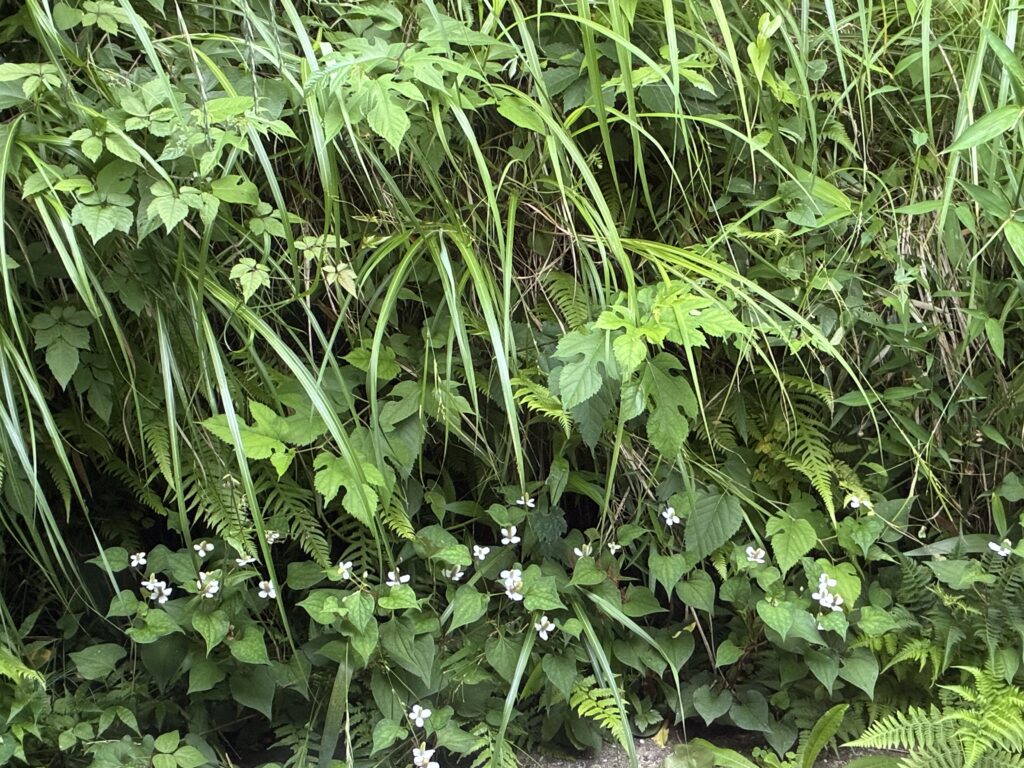
Dokudami in Bloom
Date
2026.06.04
Photo
(Photo 3)
Observation
Wild dokudami flowers were blooming beneath grasses and ferns.
Small white flowers stood out against the surrounding green vegetation.
The plants occupied a shaded and humid environment.
Seasonal flowering added subtle contrast to the forest edge.
Keywords
Dokudami
Wild Plant
Flower
Seasonal Change
Forest Edge
Related Assets
Nature Archive
Research Archive
(Medicinal Plants)
Human Experience Archive
Cultural Asset Archive
(Traditional Plant Knowledge)
Nature Archive
Archive No.
22-NA-00007
Title
Blue Flowers Along the Garden Edge
Date
2026.06.04
Photo
(Photo)
Observation
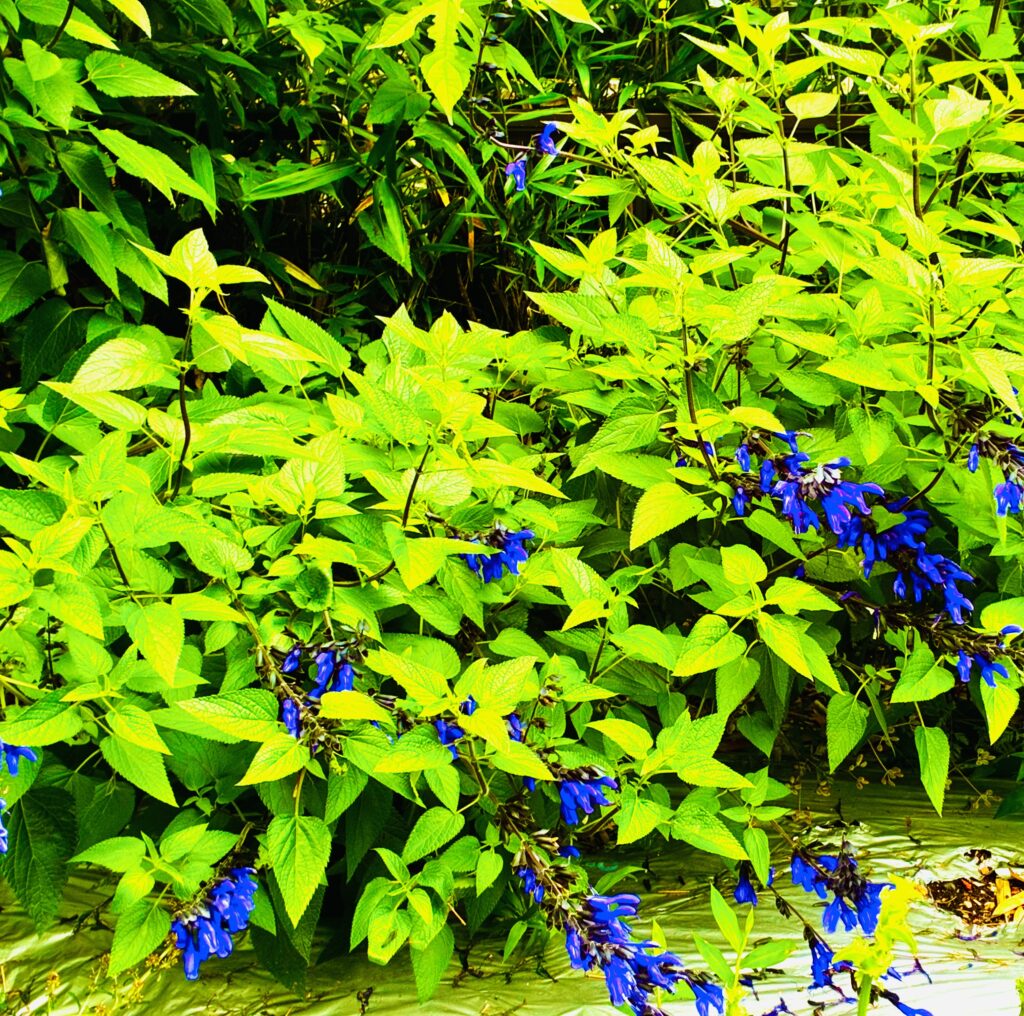
A perennial blue-flowering plant continued to bloom along the edge of the garden.
Its flowers moved gently with the wind and stood out against the surrounding green foliage.
The plant has demonstrated strong growth over several years and returns each rainy season.
Flowering begins in early summer and often continues into autumn.
Japanese Summary
数年前から庭で育っている青紫色の花。
梅雨の頃から咲き始め、毎年力強く成長しながら秋頃まで花を咲かせ続ける。
Keywords
Blue Flower
Perennial Plant
Seasonal Flowering
Garden Observation
Early Summer
Related Assets
Nature Archive
Research Archive
(Plant Identification)
Human Experience Archive
(Long-Term Relationship with Plants)
Cultural Asset Archive
(Garden Landscape)
Nature Archive
Archive No.
22-NA-00008
Title
Fragrance of the Leaves
Date
2026.06.04
Photo
(Photo)
Observation
When the leaves are gently touched, they release a fresh herbal fragrance.
The scent carries cool and refreshing characteristics reminiscent of mint.
Unlike many flowering plants, its visual presence and fragrance provide separate experiences.
The relationship between color, scent, and perception became noticeable during observation.
Japanese Summary
葉に触れると爽やかなハーブの香りが広がる。
青紫色の花の印象と香りが結びつき、視覚と嗅覚の両方で楽しめる植物である。
Keywords
Herbal Fragrance
Leaves
Scent
Perception
Sensory Observation
Related Assets
Nature Archive
Research Archive
(Plant Aroma Study)
Human Experience Archive
(Sensory Experience)
Discovery IP
(Color and Fragrance Relationship)
Nature Archive
Archive No.
22-NA-00009
Title
Unexpected Growth
Date
2026.06.04
Photo
(Photo)
Observation
The plant expanded rapidly and occupied a larger area than originally expected.
Its vigorous growth occasionally competed with nearby cultivated plants.
The observation highlighted the balance between cultivation and natural expansion.
Strong vitality became one of the defining characteristics of the species.
Japanese Summary
非常に生命力が強く、周囲の植物の領域まで広がるほど成長する。
自然の力強さと人の管理との関係を考えさせる植物である。
Keywords
Plant Growth
Vitality
Competition
Garden Ecology
Cultivation
Related Assets
Nature Archive
Research Archive
(Plant Growth Patterns)
Human Experience Archive
(Human and Nature Relationship)
Discovery IP
(Vitality and Expansion)
Nature Archive
Archive No.
22-NA-00010
Title
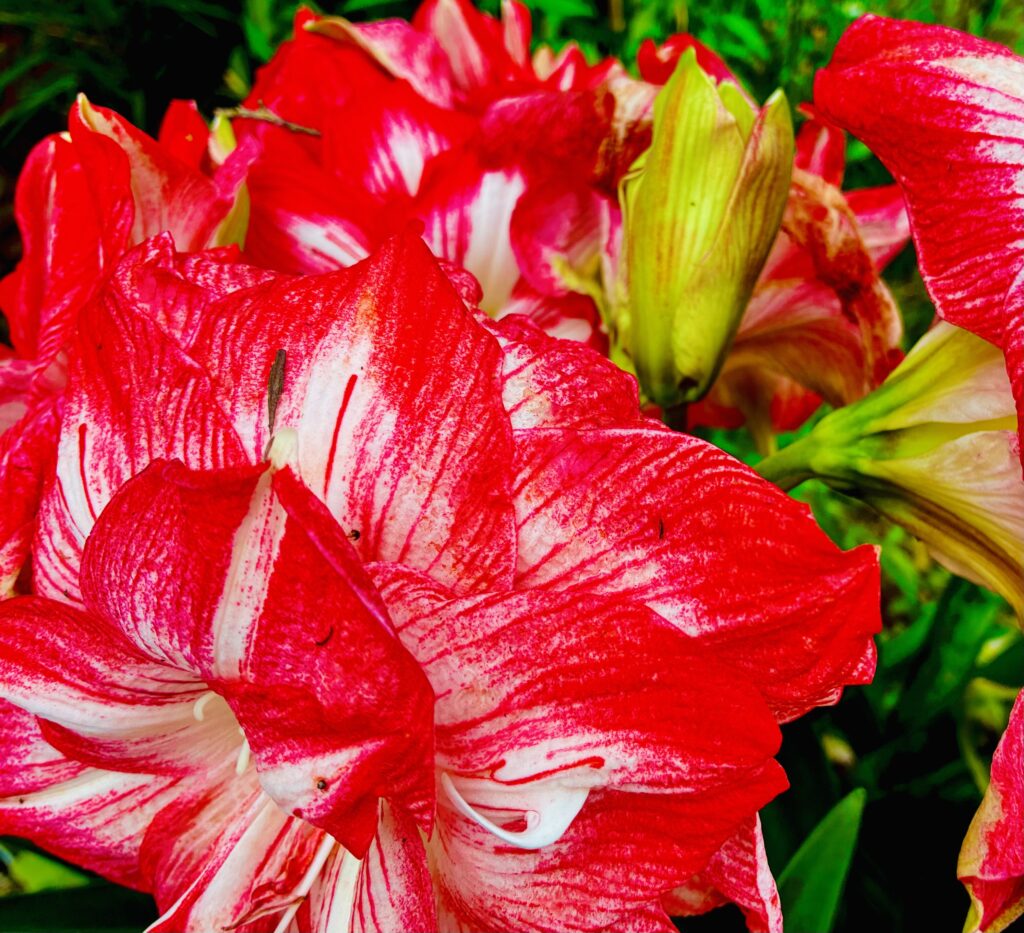
Amaryllis in Full Bloom
Date
2026.06.04
Photo
(Photo 1)
Observation
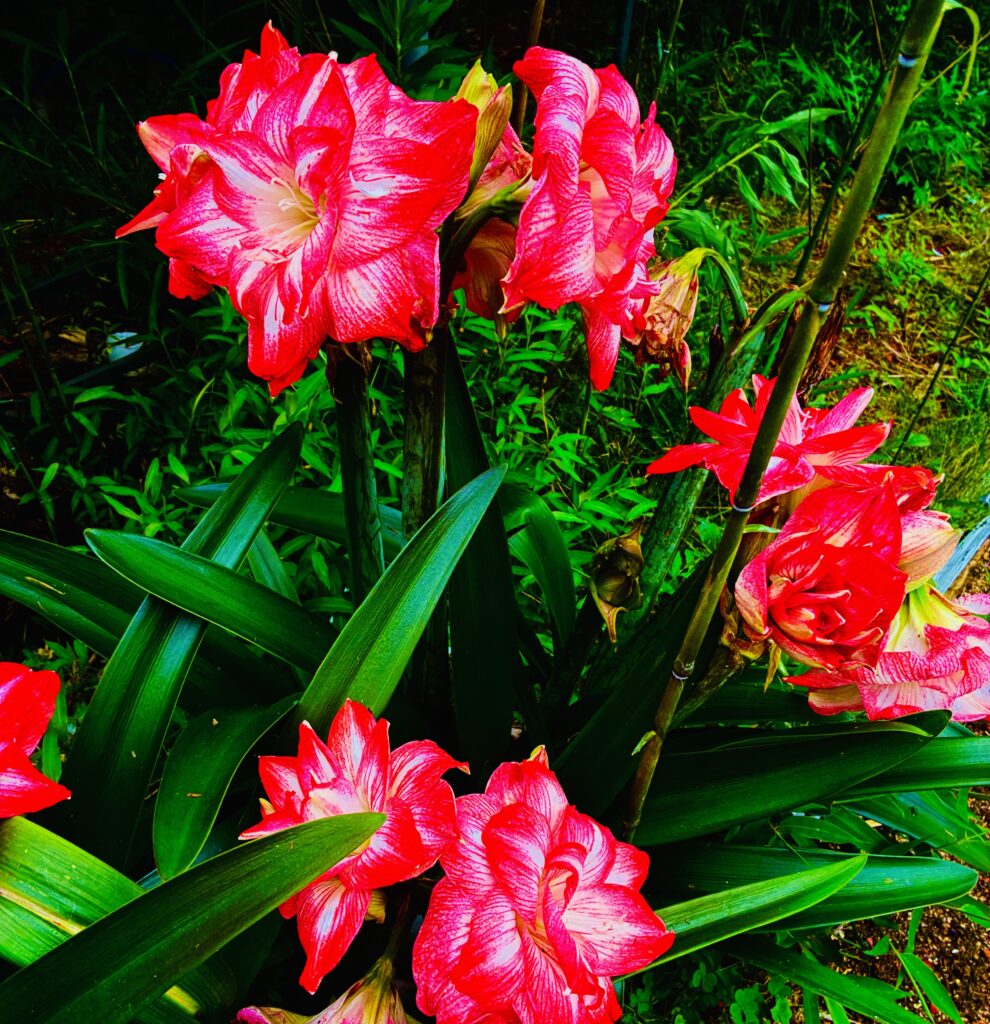
Multiple amaryllis flowers reached full bloom at the beginning of the rainy season.
Large red and white petals created a vivid contrast against the surrounding greenery.
The flowers marked the seasonal transition from spring toward summer.
Their presence became one of the most recognizable signs of early summer in the garden.
Japanese Summary
アマリリスが満開を迎えた。
鮮やかな赤と白の花は初夏の訪れを知らせる季節のサインとなっている。
Keywords
Amaryllis
Flower
Seasonal Change
Early Summer
Garden Observation
Related Assets
Nature Archive
Human Experience Archive
(Seasonal Memory)
Cultural Asset Archive
(Garden Landscape)
Nature Archive
Archive No.
22-NA-00011
Title
From One Bulb to Many
Date
2026.06.04
Photo
(Photo 2)
Observation
The amaryllis originated from a single bulb cultivated more than ten years ago.
Over time, the bulb divided repeatedly and established a larger colony.
The plant adapted successfully to its environment and expanded through continuous growth.
Its current abundance reflects many years of seasonal cycles.
Japanese Summary
一つの球根から始まったアマリリスが十年以上をかけて増殖した。
長い年月をかけた成長の記録が現在の姿に表れている。
Keywords
Bulb Plant
Growth
Long-Term Observation
Plant Propagation
Garden Ecology
Related Assets
Nature Archive
Research Archive
(Bulb Growth Observation)
Human Experience Archive
(Long-Term Care and Cultivation)
Nature Archive
Archive No.
22-NA-00012
Title
The Architecture of the Flower
Date
2026.06.04
Photo
(Photo 1, Photo 2)
Observation
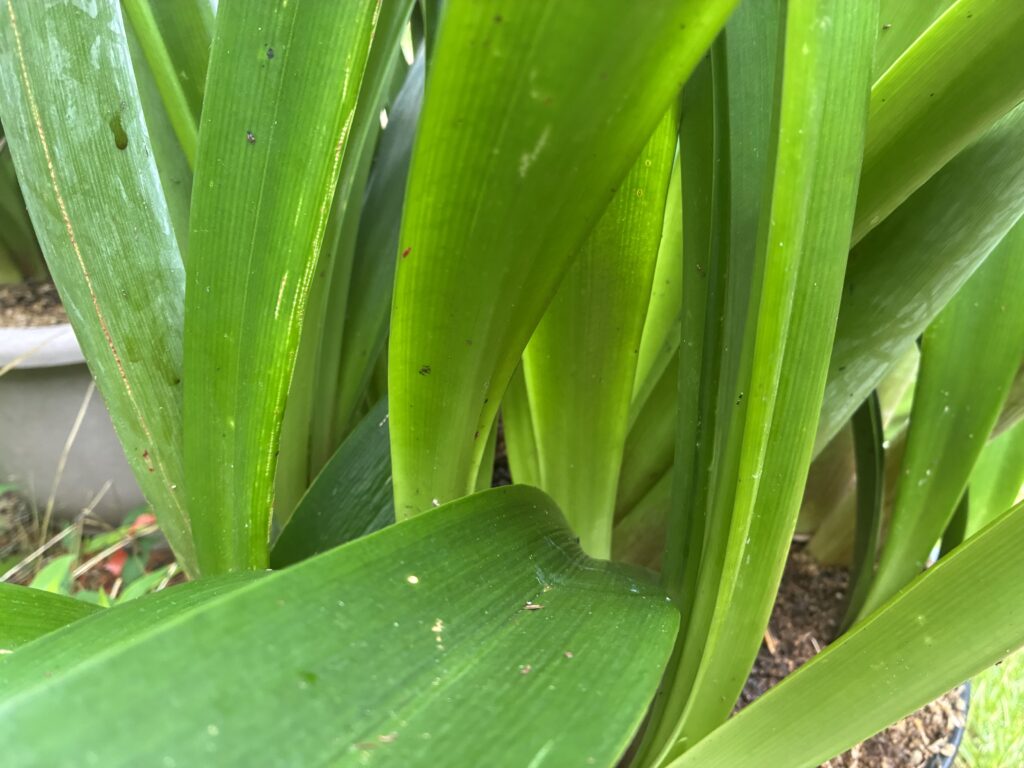
Tall stems supported multiple large flowers above the surrounding foliage.
The strong vertical structure contrasted with the broad petals and curved forms.
Bright coloration and elevated positioning increased visibility within the landscape.
The plant demonstrated both structural strength and ornamental beauty.
Japanese Summary
太く力強い茎と大輪の花が特徴的な姿をつくり出している。
構造的な力強さと華やかな美しさを同時に感じさせる植物である。
Keywords
Plant Structure
Flower Form
Color
Garden Design
Visual Impact
Related Assets
Nature Archive
Research Archive
(Plant Form and Structure)
Creative Archive
(Color and Form Study)
Human Experience Archive
(Perception of Beauty)
Nature Archive
Archive No.
22-NA-00013
Title
Signal of the Rainy Season
Date
2026.06.04
Photo
(Photo 2)
Observation
The flowering period consistently overlaps with the beginning of the rainy season.
The appearance of the blossoms serves as a recurring seasonal indicator.
Their blooming coincides with increasing humidity, warmer temperatures, and longer daylight hours.
The plant functions as a living calendar within the garden environment.
Japanese Summary
アマリリスの開花は毎年梅雨入りの時期と重なる。
庭における季節の暦として機能している植物である。
Keywords
Rainy Season
Seasonal Indicator
Phenology
Garden Calendar
Climate Observation
Related Assets
Nature Archive
Research Archive
(Seasonal Timing)
Human Experience Archive
(Seasonal Awareness)
Discovery IP
(Nature as Calendar)
Nature Archive
Archive No.
22-NA-00014
Title
Turmeric Awakens After Winter
Date
2026.06.04
Photo
(Photo)
Observation
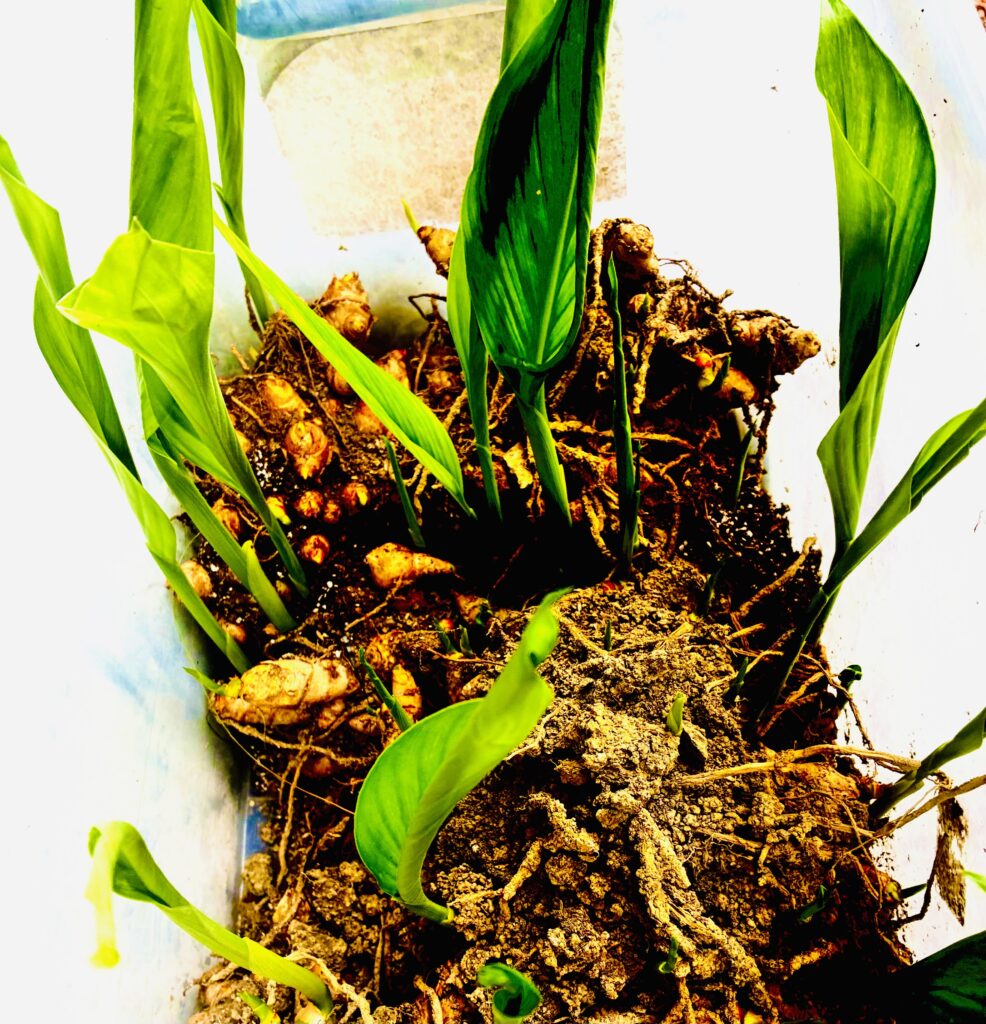
Turmeric rhizomes stored through the winter began producing new shoots in spring.
Without active watering, the rhizomes remained alive and gradually developed fresh leaves.
The emergence of new growth demonstrated the plant’s ability to survive seasonal dormancy.
Stored energy carried from the previous growing season supported renewed development.
Japanese Summary
冬を越したウコンの根茎から新しい芽が伸び始めた。
休眠から目覚める植物の生命力が観察された。
Keywords
Turmeric
Rhizome
Dormancy
Spring Growth
Plant Life Cycle
Related Assets
Nature Archive
Research Archive
(Rhizome Dormancy and Regrowth)
Human Experience Archive
(Seasonal Observation)
Nature Archive
Archive No.
22-NA-00015
Title
Stored Energy Beneath the Soil
Date
2026.06.04
Photo
(Photo)
Observation
The container revealed a dense network of rhizomes accumulated during the previous growing season.
Each rhizome served as a storage structure, preserving energy through the colder months.
New shoots emerged from multiple points across the cluster.
The underground system functioned as a living reserve for future growth.
Japanese Summary
前年に蓄えられた根茎が冬を越え、新たな芽を生み出している。
地上では見えない生命の蓄積が次の成長を支えている。
Keywords
Rhizome
Energy Storage
Plant Structure
Regeneration
Growth Cycle
Related Assets
Nature Archive
Research Archive
(Plant Storage Systems)
Discovery IP
(Invisible Foundations of Growth)
Human Experience Archive
(Long-Term Cultivation)
Nature Archive
Archive No.
22-NA-00016
Title
A Tropical Plant in Satoyama
Date
2026.06.04
Photo
(Photo)
Observation
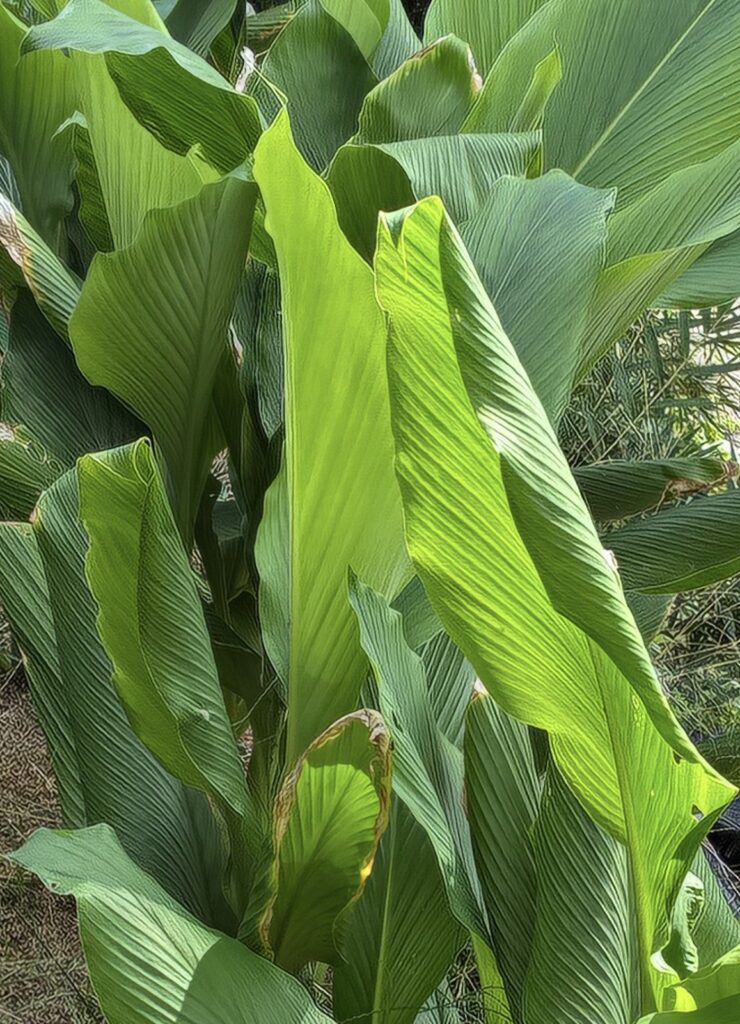
Originally obtained in Okinawa, the turmeric adapted to a satoyama environment in central Japan.
Despite differences in climate, the plant successfully completed a full growing cycle.
The observation highlighted the movement of plants across regions and their capacity for adaptation.
The young shoots represented the beginning of another season of growth.
Japanese Summary
沖縄からやってきたウコンが里山環境に適応し、新しい成長を始めている。
異なる土地で生き続ける植物の適応力が感じられる。
Keywords
Turmeric
Adaptation
Satoyama
Regional Ecology
Plant Observation
Related Assets
Nature Archive
Research Archive
(Plant Adaptation)
Cultural Asset Archive
(Okinawa Agricultural Plants)
Human Experience Archive
(Relationship Between Place and Nature)
Nature Archive
Archive No.
22-NA-00017
Title
Expansion Through the Rhizome
Date
2026.06.04
Photo
(Photo)
Observation
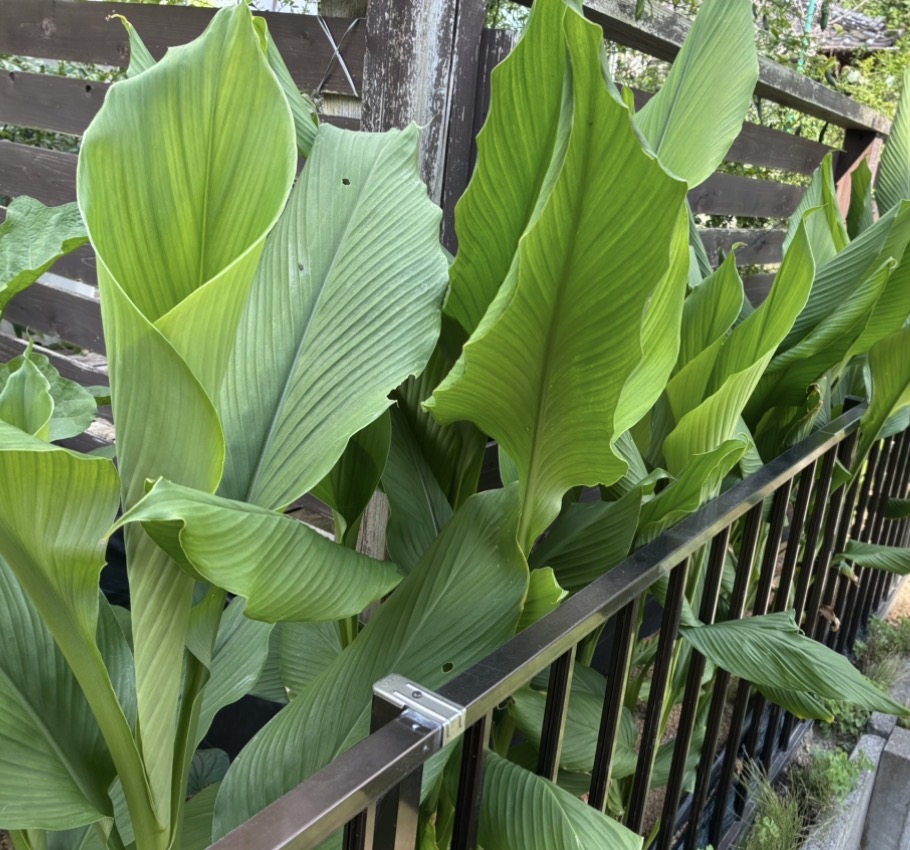
The turmeric expanded not through seeds but through the gradual enlargement of its rhizome network.
Each season added new growth and increased the size of the underground colony.
The process illustrated a pattern of continuous expansion and renewal.
Growth occurred through accumulation rather than sudden change.
Japanese Summary
ウコンは根茎を広げながら少しずつ増殖していく。
積み重ねによる拡張と再生の仕組みが観察できる。
Keywords
Expansion
Rhizome
Regeneration
Growth Pattern
Plant Colony
Related Assets
Nature Archive
Research Archive
(Propagation and Expansion)
Discovery IP
(Expansion and Possibility)
Human Experience Archive
(Observation of Growth)
Nature Archive
Archive No.
22-NA-00018
Title
Shell-Like Buds of Getto
Date
2026.06.04
Photo
(Photo 1)
Observation
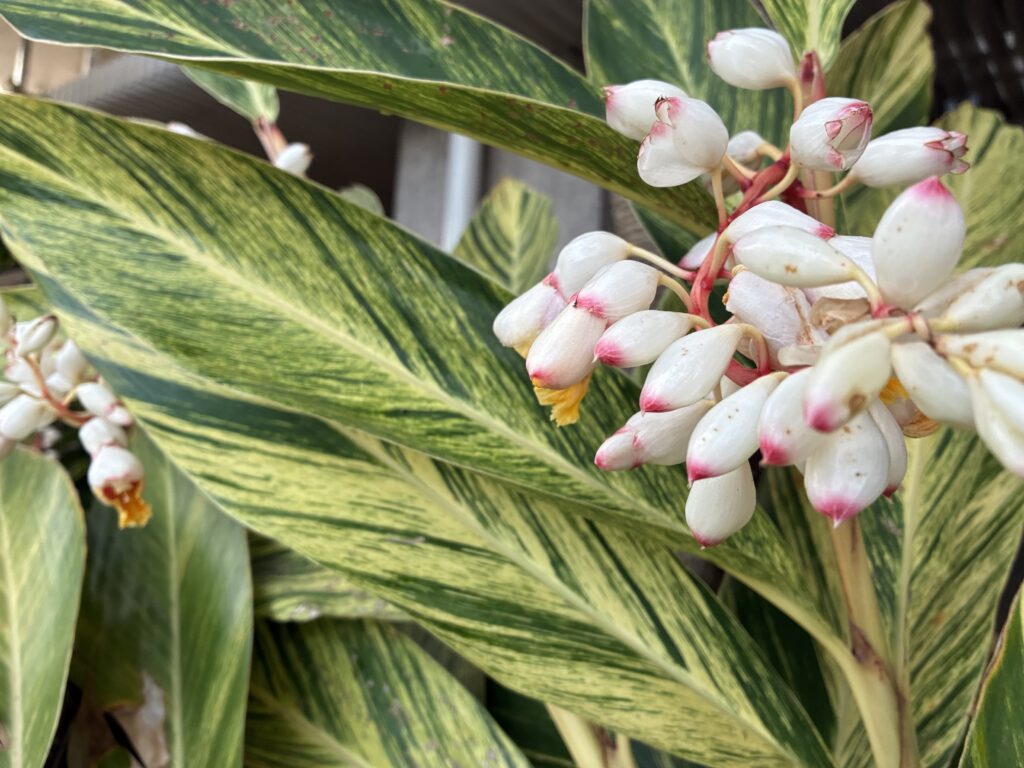
Clusters of white buds emerged beneath the striped foliage of the getto plant.
Before opening, the buds resembled small seashells hanging in delicate chains.
Soft pink tips added subtle contrast to the otherwise white flowers.
The developing blossoms suggested the arrival of early summer.
Japanese Summary
白い蕾が連なり、まるで沖縄の海辺にある貝殻のような姿を見せていた。
初夏の訪れを静かに告げる優しい花芽である。
Keywords
Getto
Flower Bud
Early Summer
Shell-Like Form
Seasonal Change
Related Assets
Nature Archive
Creative Archive
(Form and Pattern Study)
Human Experience Archive
(Seasonal Observation)
Nature Archive
Archive No.
22-NA-00019
Title
Variegated Leaves and Tropical Light
Date
2026.06.04
Photo
(Photo 2)
Observation
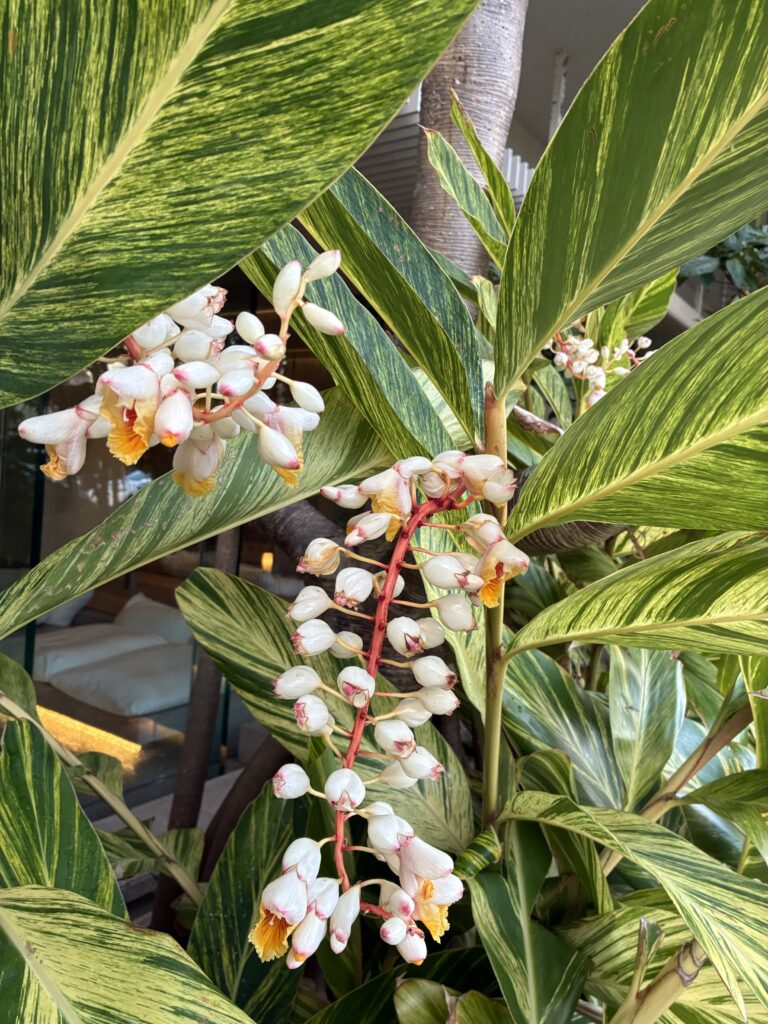
The variegated leaves displayed layers of green and yellow patterns across their surfaces.
Sunlight emphasized the contrast between the stripes and the surrounding foliage.
The foliage remained visually striking even when flowers were absent.
Leaf patterns contributed significantly to the plant’s ornamental character.
Japanese Summary
斑入りの葉は花がなくても十分な美しさを持っている。
緑と黄色の模様が南国らしい華やかさを生み出している。
Keywords
Variegated Leaf
Foliage
Tropical Plant
Color Pattern
Ornamental Plant
Related Assets
Nature Archive
Creative Archive
(Color and Pattern Study)
Research Archive
(Leaf Variation Observation)
Human Experience Archive
(Perception of Beauty)
Nature Archive
Archive No.
22-NA-00020
Title
Fragrance of Early Summer
Date
2026.06.04
Photo
(Photo 1, Photo 2)
Observation
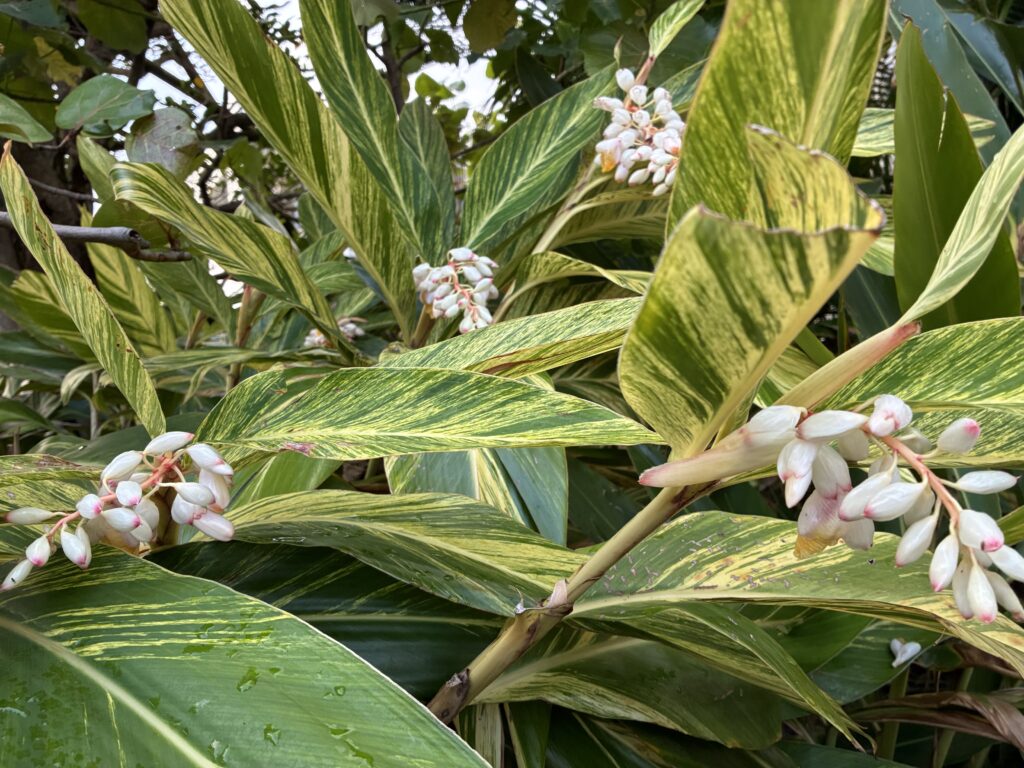
The flowers released a gentle fragrance that spread through the surrounding space.
Their appearance and scent worked together to create a strong seasonal presence.
The blooming period coincided with the beginning of summer in Okinawa.
The plant functioned as both a visual and aromatic marker of seasonal change.
Japanese Summary
花の香りと姿が一体となり、初夏の到来を感じさせる。
沖縄の暮らしの中で季節を知らせる存在となっている。
Keywords
Fragrance
Seasonal Marker
Getto
Early Summer
Sensory Observation
Related Assets
Nature Archive
Human Experience Archive
(Sensory Experience)
Research Archive
(Plant Fragrance Study)
Cultural Asset Archive
(Okinawan Seasonal Culture)
Nature Archive
Archive No.
22-NA-00021
Title
A Living Ikebana
Date
2026.06.04
Photo
(Photo 3)
Observation
The combination of flowers, foliage, color, and structure created a naturally balanced composition.
The plant appeared complete as a single living arrangement without additional elements.
Leaves, stems, buds, and flowers contributed equally to the overall form.
The observation highlighted the relationship between nature and aesthetic design.
Japanese Summary
一つの植物だけで生け花のような完成された美しさを見せていた。
自然そのものがデザインを生み出しているように感じられた。
Keywords
Ikebana
Natural Design
Composition
Beauty
Plant Form
Related Assets
Nature Archive
Creative Archive
(Natural Composition Study)
Human Experience Archive
(Perception of Form)
Discovery IP
(Nature as Design)