© 2026 22degrees. All Rights Reserved
20260711
Edo Salmon Museum “EN”
Edo Salmon Museum “EN” is a digital art museum dedicated to exploring one-of-a-kind works of art.
Rooted in the Japanese philosophy of EN, it explores art born from the invisible connections among history, nature, space, time, design, and people.
Preservation.
The source of creation.
Culture, nature, time, space, and design, preserved across generations, are brought together through EN and naturally give rise to new works of art.
The works presented here do not offer answers.
Through EN with each work, every individual cultivates a unique Human People Experience, from which new values emerge.
Preservation.
Creation.
Experience.
This continuous cycle nurtures new experiential value and cultural
assets, carrying them forward into the future.
© 2026 22degrees. All Rights Reserved
20260711
Edo Salmon Museum「縁」
© 2026 22degrees. All Rights Reserved
Edo Salmon Museum「縁」は、世界で唯一無二の芸術作品を探究するデジタルアートミュージアムである。
日本の「縁」の思想を基盤とし、歴史、自然、空間、時間、デザイン、そして人との見えないつながりから生まれる芸術を探究する。
Preservation(保存)。
創造の源泉。
保存によって受け継がれた文化、自然、時間、空間、デザインは、「縁」によって結ばれ、新たな芸術作品として生まれる。
作品は答えを示すものではない。
作品との「縁」によって、一人ひとりに異なるHuman People Experienceが育まれ、それぞれの新たな価値が創造される。
保存、創造、体験。
その循環は、新たな体験価値と文化資産を育み、未来へ継承されていく。
© 2026 22degrees. All Rights Reserved
ID-22-FA-001
Title
Eames Location Study 001
Edo Period Passage
Subtitle
A Location Study Before Installation
Description
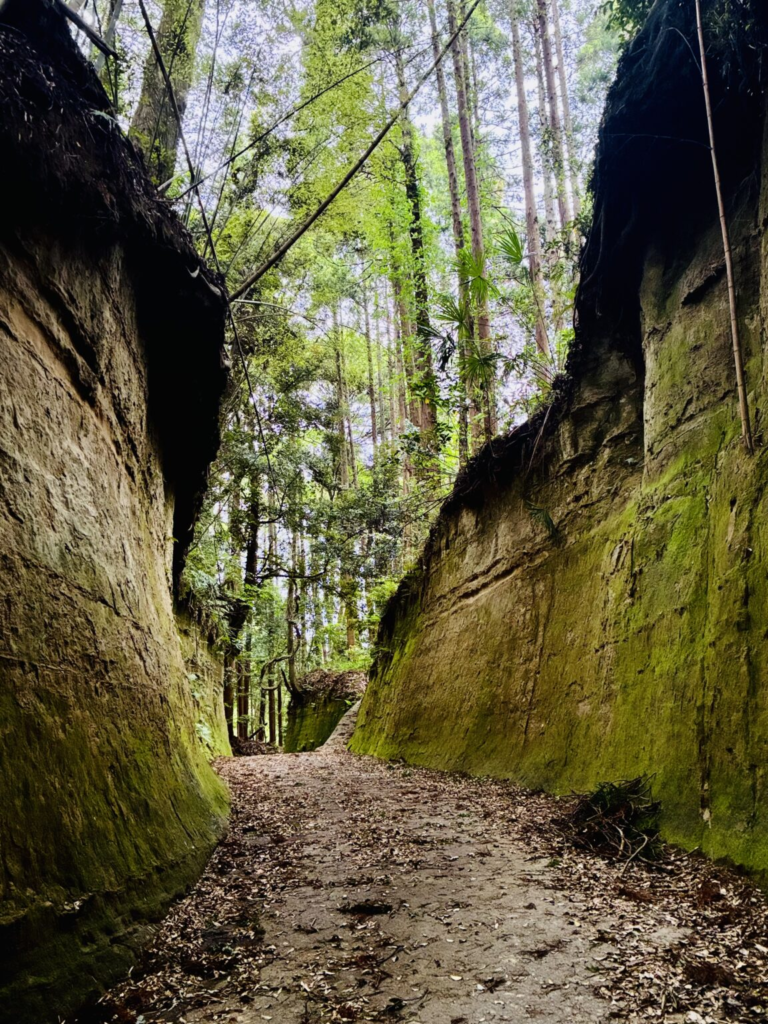
This record documents a location study conducted prior to the installation of an Eames Arm Shell Chair.
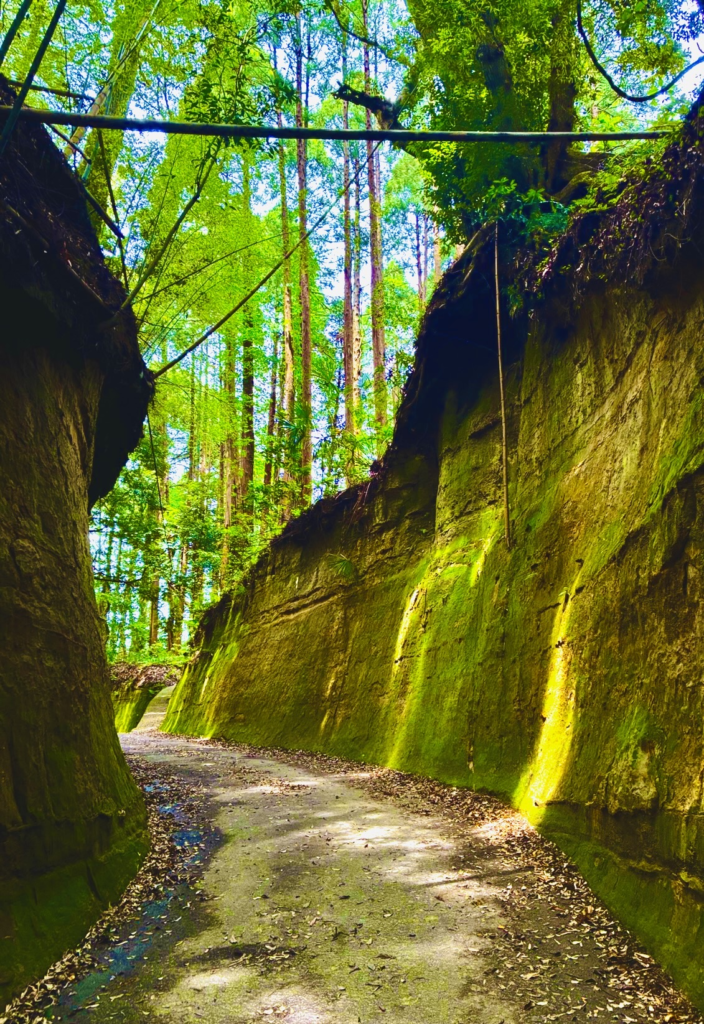
The site is an old passage carved through the earth, believed to have originated during the Edo period. Over many decades, nature has gradually reclaimed the cut walls, covering them with moss, roots, and layers of time.
This study explores the possibility of placing a mid-century industrial design object within a historical landscape shaped by both human activity and natural processes.
The purpose is not merely to photograph a chair, but to observe how different eras, materials, values, and cultural contexts may coexist within a single frame.
The installation has not yet taken place.
This record serves as the starting point for a future observation project examining the relationship between design, nature, history, and human perception.
Location Study
June 2026
Related Assets
Furniture Archive
・Eames Arm Shell Chair
Nature Archive
・Forest Landscape
Research Archive
・Time and Design
・Landscape Observation
──────────────────
ID-22-FA-001
タイトル
イームズ・ロケーションスタディ 001
江戸時代の切り通し
サブタイトル
設置前ロケーション調査
説明
本記録は、イームズ・アームシェルチェア設置前に行われたロケーション調査の記録である。
この場所は江戸時代に掘削されたと伝えられる切り通しであり、長い年月の中で自然が再びその空間へ入り込み、苔、樹木、根、風化した地層が独特の景観を形成している。
本調査は、ミッドセンチュリー期を代表する工業デザインを、この歴史的な自然空間に配置した場合にどのような関係性が生まれるのかを観察するための事前研究として実施された。
目的は単なる家具撮影ではなく、異なる時代、素材、文化、価値観が一枚の風景の中でどのように共存するのかを観察することである。
現時点では椅子の設置は行われていない。
本記録は、今後行われるデザイン・自然・歴史・人間の知覚に関する観察プロジェクトの出発点となるものである。
Location Study
2026年6月
Related Assets
Furniture Archive
・Eames Arm Shell Chair
Nature Archive
・Forest Landscape
Research Archive
・Time and Design
・Landscape Observation
Current Research Focus:
考察記録
金谷郷の切り通しとEames Zenith Arm Shell Chair
時間・空間・デザインの関係性について
記録日
2026年7月
文書区分
検討・考察中(Working Notes)
はじめに
本資料は、千葉県大網白里市金谷郷に残る江戸時代後期の「切り通し」と、1950年代初頭に誕生したEames Zenith Arm Shell Chairとの関係性について、現在検討・考察している内容を整理した記録である。
本内容は現時点での研究メモであり、今後の現地調査、撮影、空間検証を経て発展・修正される可能性がある。
金谷郷の切り通し
金谷郷の切り通しは、江戸時代後期から幕末頃に生活道路として丘陵地を人力で掘削して築かれたと考えられている房総特有の素掘り切り通しである。
この場所は観光施設として整備された人工空間ではなく、生活道路として現在も利用され続けている点に大きな価値がある。
切り通しには、
・数百年にわたる生活の歴史
・人間が地形へ加えた最小限の介入
・風化による時間の堆積
・現在も続く生活の営み
・人工物が自然へ戻ろうとする過程
が同時に存在している。
人工と自然の境界
この空間に立つと感じられるのは、
「自然」
でもなく、
「人工」
でもない。
人間が自然へ介入し、その後長い年月を経て自然と再び融合し始めた、
人工と自然の境界空間
という感覚である。
Zenith Arm Shell Chairとの共通性
1950年代初頭に誕生したZenith Arm Shell Chairもまた、
ガラス繊維、
樹脂、
新しい成形技術によって生み出された工業デザインである。
しかし初期FRPは、
・繊維の揺らぎ
・個体差
・偶然性
・半透明感
・素材感
を色濃く残しており、
完全に工業化された無機質な製品ではなく、
自然性を内部に残した工業デザインとも考えられる。
共通する本質
切り通しも、
Zenith Arm Shell Chairも、
どちらも
自然を理解した上で、人間が新しい空間や文明を創造した痕跡
である。
一方は江戸時代の生活土木。
もう一方は20世紀工業デザイン。
異なる時代に誕生しながら、
人間の創造という点では共通している。
空間演出についての考察
現在検討している構想では、
切り通しの中央にZenith Arm Shell Chairを静かに配置する。
椅子は真正面ではなく、
正面を基準として約22.5度左方向へ向ける構成を有力案として検討している。
この22.5度という僅かな角度によって、
椅子が空間を「見る」存在となり、
静かな動きと余韻を生み出す可能性がある。
この角度は22degreesという思想とも緩やかに呼応する。
家具を置くのではない
この試みは、
歴史的景観へ家具を配置する演出ではない。
江戸時代の生活土木と、
1950年代工業デザインという、
二つの異なる時間層を一つの空間で静かに対話させる試みである。
現在の仮説
現時点では、
金谷郷の切り通しとZenith Arm Shell Chairには、
「人工と自然」
「時間の堆積」
「人間の創造」
という共通した思想的背景が存在する可能性があると考えている。
もしこの仮説が撮影や空間体験によって成立するならば、
一般的なヴィンテージ家具写真とは異なる、
時間・空間・デザインが融合した唯一無二の体験空間を創出できる可能性がある。
今後の検討事項
・現地での撮影位置の検証
・椅子の配置位置の最適化
・22.5度配置の効果検証
・光・湿度・季節による印象変化
・写真・映像・音響との組み合わせ
・22degrees Universeとの思想的整理
記録日
2026年7月
文書区分
検討・考察中(Working Notes)
Research Notes
Kanayago Kiridoshi and the Eames Zenith Arm Shell Chair
A Study on the Relationship Between Time, Space, and Design
Recorded
July 2026
Document Status
Working Notes (Under Study)
Introduction
This document records an ongoing study exploring the relationship between the historic Kiridoshi (hand-cut passage) in Kanayago, Oamishirasato City, Chiba Prefecture, and the Eames Zenith Arm Shell Chair created in the early 1950s.
The ideas presented here represent a current stage of research and are expected to evolve through future site visits, photography, spatial experiments, and continued analysis.
The Kanayago Kiridoshi
The Kanayago Kiridoshi is believed to have been excavated by hand during the late Edo period as a practical road connecting local communities across the hilly landscape.
Rather than being a tourist attraction or monumental work of engineering, it remains a living piece of everyday infrastructure that has continued to serve local people for centuries.
Within this landscape exist simultaneously:
- Centuries of everyday human activity
- Minimal human intervention into natural topography
- The accumulation of time through weathering
- A road that continues to function today
- An artificial structure gradually returning to nature
The Boundary Between Nature and Humanity
Standing inside the Kiridoshi does not evoke a simple contrast between nature and the artificial.
Instead, it creates the feeling of occupying a unique threshold where human intervention and natural processes have gradually merged over hundreds of years.
It represents a living boundary between nature and human creation.
A Parallel with the Zenith Arm Shell Chair
The Eames Zenith Arm Shell Chair, introduced in the early 1950s, symbolized a new era of industrial design through the innovative use of fiberglass-reinforced plastic.
Yet the earliest fiberglass shells still retained qualities often associated with natural materials:
- Irregular fiber patterns
- Individual variations
- Material unpredictability
- Semi-transparency
- Rich tactile texture
Rather than appearing completely industrial, these early shells preserve a sense of organic character within industrial production.
A Shared Foundation
Although separated by centuries, the Kanayago Kiridoshi and the Zenith Arm Shell Chair share a common foundation.
Both represent human attempts to reinterpret nature through design.
One emerged from the practical needs of an Edo-period rural community.
The other emerged from twentieth-century industrial innovation.
Despite their different origins, both embody human creativity transforming the natural world into enduring cultural artifacts.
Spatial Composition Under Consideration
One current concept under study is to position a Zenith Arm Shell Chair quietly at the center of the Kiridoshi.
Rather than facing directly forward, the chair would be rotated approximately 22.5 degrees to the left from the viewer’s frontal axis.
This subtle orientation may create a stronger sense that the chair is observing the surrounding landscape rather than merely occupying it.
The angle also resonates conceptually with the philosophy of 22degrees.
More Than Placing a Chair
This project is not intended as a simple photographic composition of a vintage chair within a historical landscape.
Instead, it seeks to create a dialogue between two different eras of human creativity:
- Edo-period civil engineering shaped by everyday life
- Mid-century industrial design shaped by technological optimism
The objective is to allow these two historical layers to coexist within a single spatial experience.
Current Working Hypothesis
At this stage of the research, it appears possible that the Kanayago Kiridoshi and the Zenith Arm Shell Chair share deeper conceptual connections through:
- The relationship between nature and human intervention
- The accumulation of time
- Human creativity
- Enduring material presence
- Spatial memory
If this hypothesis proves meaningful through future photographic and spatial experimentation, the resulting work may offer a distinctive experience unlike conventional vintage furniture photography.
Future Research
Current areas under investigation include:
- On-site photographic positioning
- Chair placement within the passage
- Evaluation of the 22.5-degree orientation
- Seasonal changes in light, humidity, and atmosphere
- Integration of photography, film, and sound
- Further conceptual development within the 22degrees Universe
Recorded
July 2026
Document Status
Working Notes (Under Study)